Rudraksha Lab Certificate Format: What a Genuine Report Must Contain
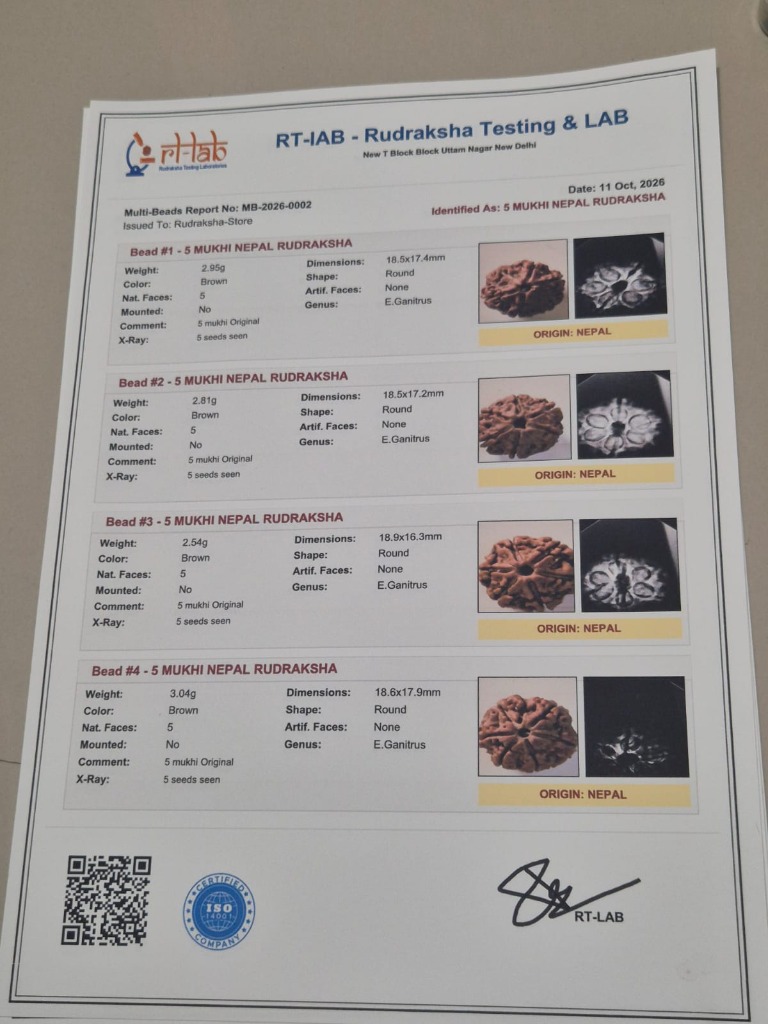
Understanding the proper rudraksha lab certificate format is critical for laboratory directors, gemologists, and sacred bead traders. As buyers become increasingly educated on counterfeit detection, generic "authenticity cards" containing only a picture and Mukhi label are routinely rejected by consumers, temples, and international customs authorities.
A legitimate, legally defensible testing report must reflect rigorous laboratory methodologies, botanical classification, digital radiographic locule counts, and cryptographic online verification. Deploying modern rudraksha lab software ensures that every issued certificate strictly conforms to international gemological reporting protocols.
Mandatory Data Fields in an Authentic Rudraksha Lab Certificate Format
According to ISO 9001:2015 laboratory compliance and international gemological benchmarks, every genuine Rudraksha test certificate must present the following ten scientific data points:
An unalterable identification number (e.g., #RLT-2026-0168) linked directly to the laboratory's centralized database registry.
Formal scientific identification: Elaeocarpus ganitrus Roxb. (or allied species), certifying natural tree-grown botanical origin.
The count of deep natural vertical clefts running from the apex to the basal pedicel cavity.
The number of natural internal seed compartments revealed by radiography. Must match the external Mukhi count to rule out carved lines.
Measured on a certified digital analytical balance down to 0.01 grams (or carats). Weight is a primary metric to detect hollow or glued fakes.
Exact millimeter measurements (Height × Width × Depth) captured via digital vernier calipers.
Clear differentiation between Nepal origin (prominent deep spines, dense endocarp) and Indonesian / Java origin (smooth, compact beads).
Assessment of soundness: Grade A (Akhanda / Complete), Grade B (Minor surface fissure), or Grade C (Khandita / Structural defect).
True-color macro photograph showing natural surface texture alongside the cross-sectional X-ray image.
Direct HTTPS link pointing to the laboratory's live online database record, allowing instant verification on any mobile device.
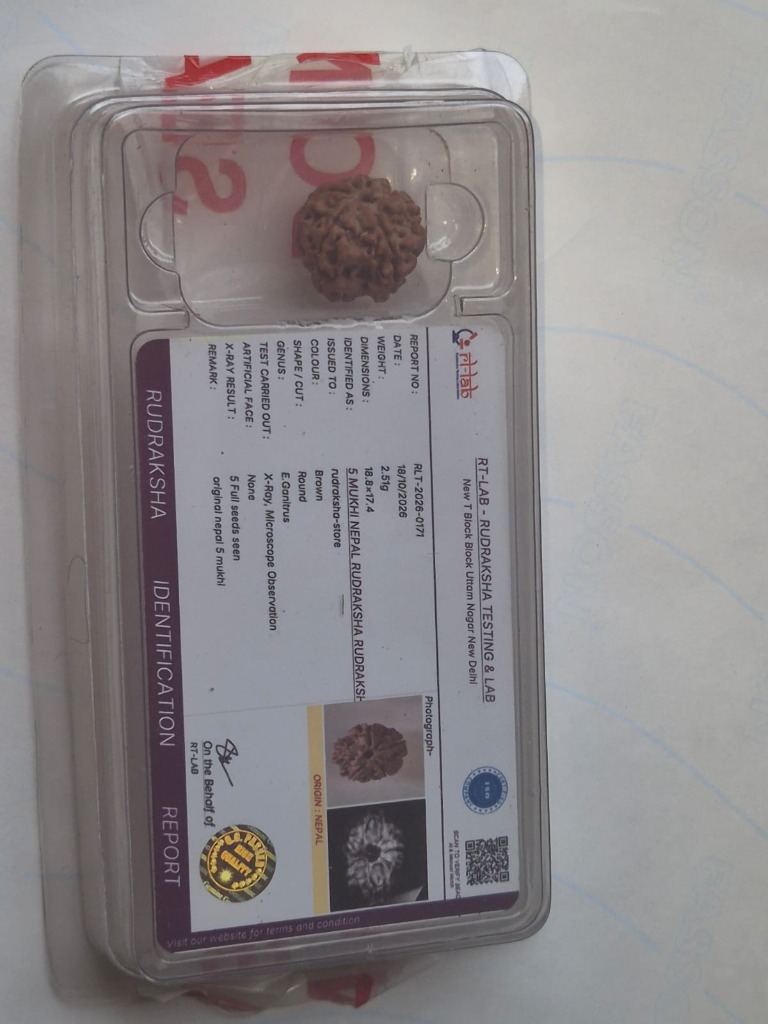 Smart PVC Format (Front): Macro Photo & Bead Specs
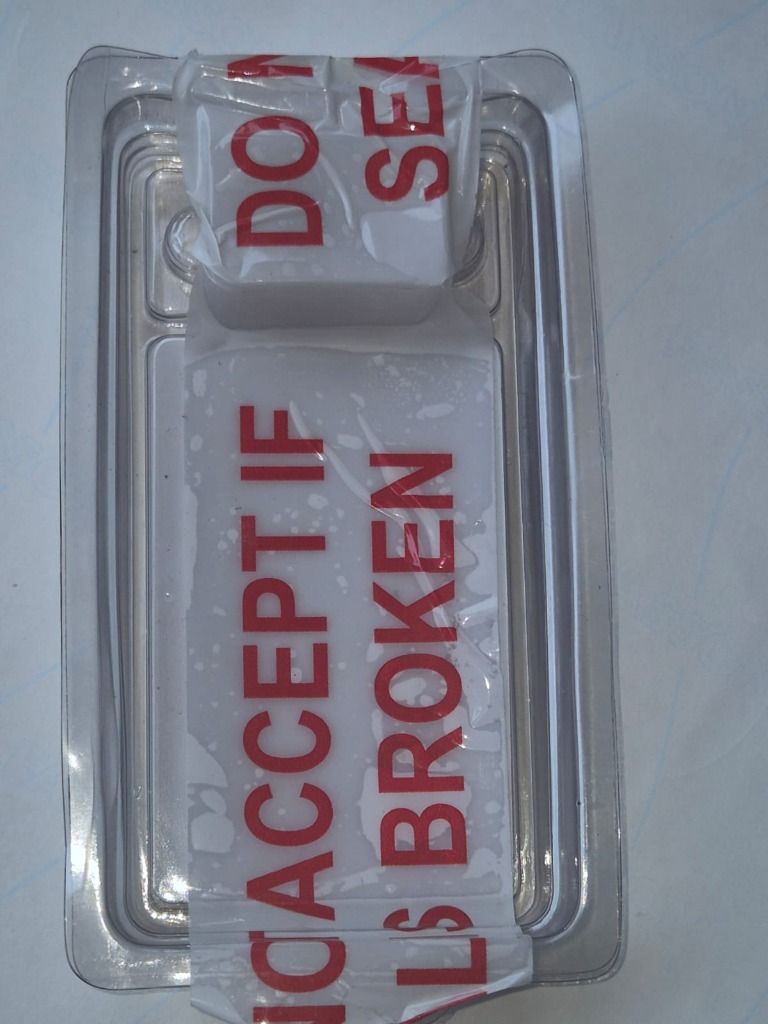 Smart PVC Format (Back): QR Code & Lab Hologram
Comparing the 3 Modern Certificate Formats
High-volume testing centers standardise their output across three purpose-engineered formats depending on customer requirements:
| Format Type | Dimensions & Substrate | Primary Use Case | Security Features |
|---|---|---|---|
| Smart PVC Plastic Card | 85.6 × 53.98 mm (CR-80 Thermal PVC) | Retail buyers, wallet carry, export parcels | Micro-text, Hologram, Dynamic QR |
| A4 Technical Dossier | 210 × 297 mm (Heavy 300 GSM Bond) | Temple archives, high-value beads (1–21 Mukhi) | Embossed gold foil seal, X-ray spread |
| A3 Multi-Bead Mala Spread | 297 × 420 mm (Double Fold Dossier) | Siddh Malas, Indra Malas (54–108 beads) | Bead-by-bead radiograph matrix |
Recommended Technical Guides & Whitepapers
Frequently Asked Questions (FAQ)
What are the essential fields on a genuine Rudraksha certificate? ↓
Every genuine certificate must present the Report ID, Botanical Genus (Elaeocarpus ganitrus), Mukhi count, X-ray locule count, calibrated weight (0.01g precision), dimensions (mm), origin (Nepal vs Indonesia), structural soundness grade, macro & radiograph images, and a live QR verification code.
Can counterfeiters easily copy the certificate layout? ↓
While counterfeiters can mimic visual text using Photoshop, they cannot counterfeit the dynamic QR code verification. When scanned, our software opens the live laboratory database record on your verified domain, rendering static fake printouts completely useless.
Why is the internal locule count mandatory? ↓
External clefts can be faked by carving or gluing. The internal seed chamber count (verified by digital radiography) confirms the biological seed compartments match the external flutes without any synthetic alterations.
How does LabAuthentiq software standardize certificates? ↓
LabAuthentiq SaaS automatically formats and aligns all scientific data into pre-calibrated CR80 PVC card and A4/A3 report templates. Technicians enter test results once, and the software handles printer margins, QR code generation, and cloud backups automatically.
Upgrade Your Certificate Format with LabAuthentiq SaaS
Produce professional CR80 Smart PVC cards and high-resolution A4 dossiers with built-in QR verification and 1 Year of Cloud Hosting.